He Came in a Wheelchair. He Walked Out with His Dignity.
Six months ago, Rajesh’s doctor told him that amputation was inevitable. His diabetic foot ulcer wasn’t healing. Infection was spreading.
Not just last week, Rajesh walked out of Lexington Healthcare in HSR Layout on both his feet. With his dignity intact.
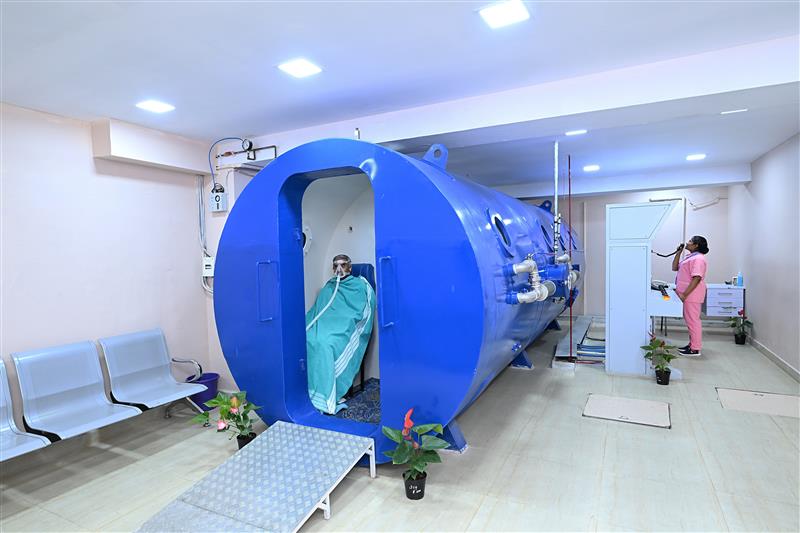
What changed wasn’t a miracle drug or experimental surgery. It was oxygen. Under pressure. In a chamber that looks like something from a submarine movie, but works wonders.
And it’s right here in Bangalore.
What Nobody Tells You About Losing a Limb in India
In India, losing a limb doesn’t just mean losing mobility.
It means:
- Losing your livelihood (most workplaces aren’t wheelchair-accessible)
- Losing independence (prosthetics are expensive; caregiving is necessary)
- Facing stigma that medicines can’t treat
This is why at Lexington Healthcare, our policy is to save limbs, avoid amputation and give you another chance at life as far as possible.
The Wound That Started Everything
What most people don’t understand is: healing is not a local process. It’s a systemic one.
Your skin doesn’t heal by itself. It needs:
- Blood flow brings nutrients
- Oxygen to fuel repair
- White blood cells fight infection
- Nerves that signal when something’s wrong
In patients with diabetes, vascular disease, or chronic illness, even one of these systems failing can stop healing completely.
The wound you see is just the surface. Underneath, there’s a war your body is losing.
Where Oxygen Enters the Story (And Why Pressure Matters)
Every medical student learns this: oxygen is essential for healing.
What they don’t always learn is this: sometimes, blood can’t deliver enough oxygen to where it’s needed.
In a diabetic foot ulcer or an ischemic wound, the tiny blood vessels (microcirculation) are damaged or blocked. Red blood cells can’t reach the tissue. The wound becomes an oxygen-starved zone.
Bacteria love low-oxygen environments. Healing cells can’t function without it.
This is where Hyperbaric Oxygen Therapy does something your lungs and blood alone cannot.
What Actually Happens Inside the Chamber
HBOT involves breathing 100% pure oxygen inside a pressurised chamber—usually at 2 to 3 times normal atmospheric pressure.
Under these conditions:
- Oxygen dissolves directly into your blood plasma (not just red blood cells)
- It reaches tissues that have almost no blood supply
- White blood cells become up to 5 times more effective at killing bacteria
- New blood vessel formation (angiogenesis) gets triggered
- Swelling reduces, which itself improves circulation
Think of it like this: normally, oxygen delivery is like sending supplies on trucks (red blood cells) through damaged roads (blood vessels).
HBOT is like an airlift. It doesn’t need the roads. It saturates the plasma itself and reaches the wound directly.
“I Didn’t Know This Existed. And It’s in Bangalore?”
This is what we hear most often.
Patients who’ve been to three hospitals. Tried five types of dressings. Been on antibiotics for months. Seen their wound care costs spiral into lakhs.
And nobody told them about HBOT.
Why? Because until recently, hyperbaric oxygen therapy in India was rare. Expensive. And Unheard of. Lexington Healthcare is changing that.
We brought hospital-grade HBOT to accessible locations:
- HSR Layout, Bangalore – easily reachable via metro and bus routes
- Rajajinagar, Bangalore – close to Yeshwanthpur and Mahalakshmi Layout
- Mysuru – for patients across Karnataka who don’t need to travel to Bangalore
This is not experimental. It’s not alternative medicine. It’s evidence-based therapy used in top hospitals worldwide—and now, it’s available where you live.
When Does Lexington Actually Use HBOT? (We Don’t Use It for Everything)
Here’s something important: HBOT is not a first-line treatment. And we never use it alone. We consider it only after a full evaluation, and only when it can genuinely change outcomes.
Conditions Where Evidence Is Strongest
Medical research and clinical consensus support HBOT for:
- Chronic diabetic foot ulcers that haven’t healed with standard wound care
- Non-healing wounds due to poor circulation (ischemic wounds)
- Radiation-induced tissue damage (after cancer treatment)
- Severe soft tissue infections where oxygen helps antibiotics work
- Acute emergencies like carbon monoxide poisoning, gas embolism, or crush injuries
In these cases, studies show HBOT can:
- Improve healing rates by 40–60%
- Reduce major amputation risk significantly
- Cut down infection complications
- Improve quality of life and mobility
But here’s the critical part: these benefits only happen when we address the root problems at the same time.
How We Decide If HBOT Is Right for You
At Lexington, before we suggest HBOT, we ask deeper questions:
Is blood flow adequate—or can it be improved? If your arteries are severely blocked, oxygen won’t reach the tissue, no matter how much pressure we use. Sometimes vascular surgery comes first.
Is the infection under control? HBOT enhances your immune system, but it doesn’t replace antibiotics or debridement (cleaning dead tissue). Infection control is non-negotiable.
Is the wound capable of healing? If tissue is already dead (gangrenous), HBOT won’t revive it. We need viable tissue that’s struggling—not tissue that’s gone.
Is your overall health stable enough? Uncontrolled blood sugar, severe malnutrition, and untreated heart or lung disease—all of these reduce the chances HBOT will work.
This is why our evaluation includes:
- Vascular studies (Doppler ultrasound, angiography if needed)
- Infection markers, wound cultures, and sometimes bone scans
- Diabetes control assessment
- Fitness check
When blood flow is adequate and infection is controlled, HBOT is used to speed up your own body’s healing process.
What Patients Actually Experience During HBOT
Let’s be practical. If you or your loved one needs HBOT, here’s what actually happens:
The Session Itself
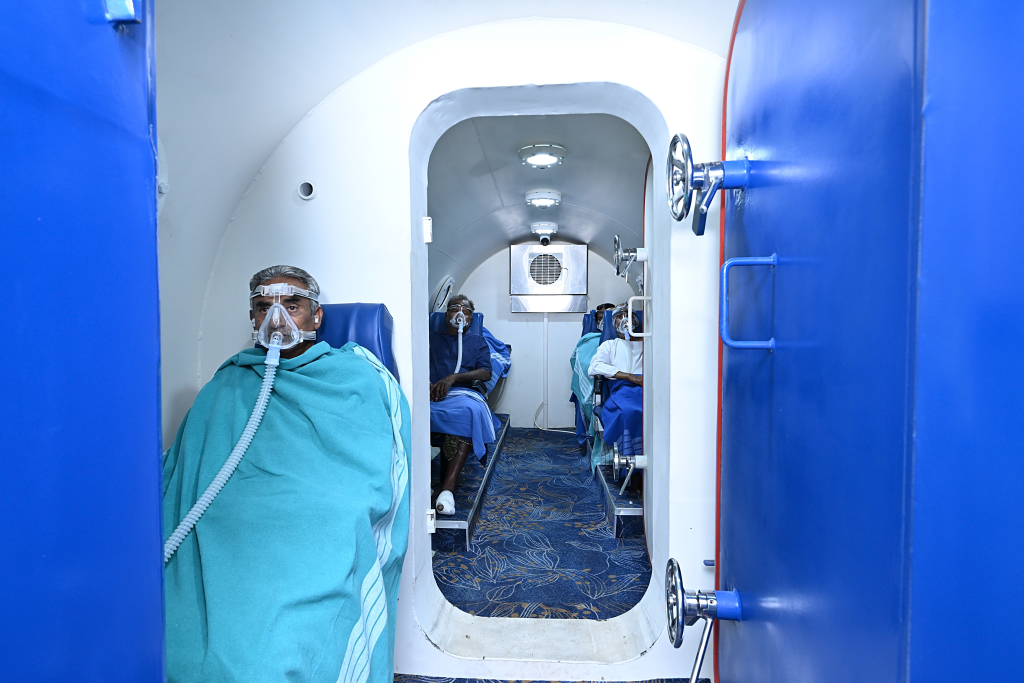
- You lie down in a clear, pressurised chamber (some are large enough to sit in, some are individual tubes)
- Sessions last 60 to 90 minutes
- You breathe normally—the oxygen is delivered through a mask or hood
- You can rest, listen to music, or even nap
- Most patients come 5 days a week for several weeks (total sessions vary widely)
What You Might Feel
- Ear pressure, like during a flight or driving in the hills—we teach you how to equalise.
- Mild lightheadedness initially (rare, and it passes)
- Fatigue after early sessions as your body adjusts
Safety
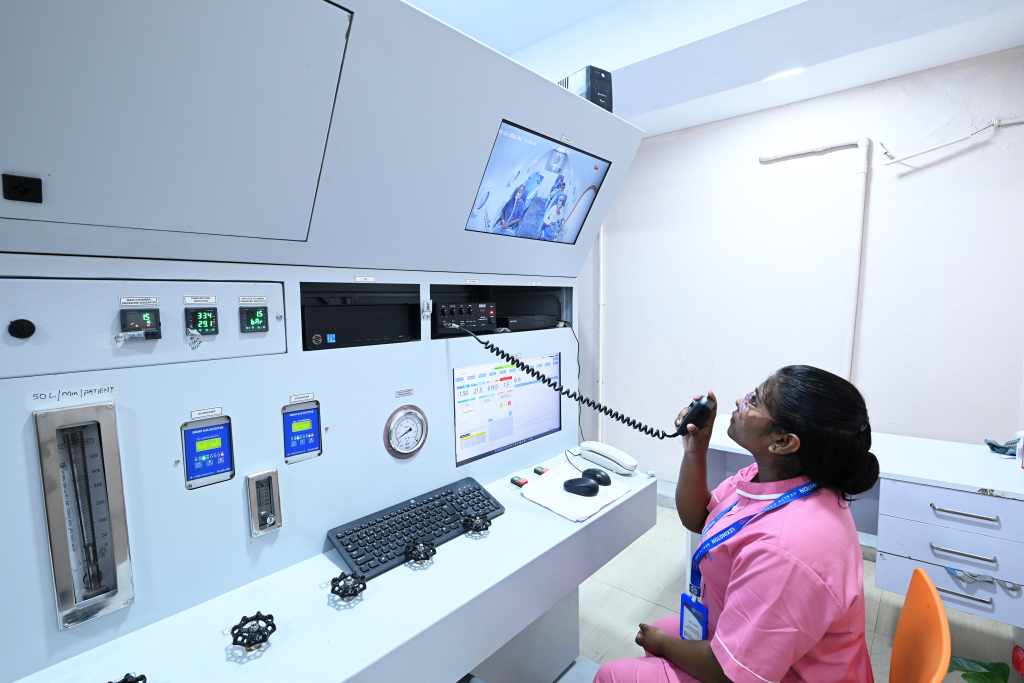
- You’re monitored throughout
- Staff are trained in hyperbaric medicine
- Serious complications are extremely rare in hospital settings
- You go home the same day
This is outpatient therapy. You can continue work, family life, and other activities simultaneously.
When HBOT Is NOT the Answer
There are a few cases where we don’t recommend HBOT. Sometimes, the right path is vascular surgery. Sometimes, it’s palliative care and pain management. And sometimes, it’s a below-knee amputation that’s done early and cleanly, allowing for a good prosthetic fit.
Authority in medicine isn’t built by offering more treatments. It’s built by offering the right ones.
At Lexington, we don’t promise miracles. We promise honesty, evidence and sound judgment.
What Patients and Families Tell Us
“They told us that amputation was the only option. We were preparing for it—mentally, financially, and emotionally. Then my son found Lexington Healthcare. Today, my father still has his foot. He’s walking. I don’t know how to even process this relief.”
— Daughter of a 68-year-old diabetic patient
“I’m a cab driver. Losing my leg would have meant losing my income, my family’s future. HBOT gave me a chance I didn’t know existed. I’m still driving. Still providing.”
— 52-year-old patient
“The wound on my mother’s ankle had been there for six months. We’d tried everything in Mysuru. When we came here, they didn’t just treat the wound—they treated her from the inside out. HBOT was part of it, but it was the hospital’s holistic approach that saved her.”
— Son of a 61-year-old patient
These aren’t paid testimonials. They’re the voices of people who almost gave up.
FAQs: What Patients Really Want to Know
Is HBOT painful?
No. The most common sensation is ear pressure, like takeoff in an aeroplane. We teach you techniques to equalise pressure easily.
How many sessions will I need?
It varies. Some patients need 20 sessions. Others need 40 or more. It depends on wound response, overall health, and how well other factors (infection, blood flow, diabetes) are managed.
Can HBOT replace surgery or antibiotics?
No. It works alongside them. Think of it as part of a team, not a solo player.
Is it safe for elderly patients or people with heart conditions?
Often yes, but only after thorough screening. We assess lung function, ear health, and cardiac stability before clearing anyone for HBOT.
Will it definitely prevent amputation?
We can’t promise that. What we can say is: in properly selected patients, HBOT significantly reduces amputation risk when combined with optimal wound care.
When You Should Seek Evaluation (Don’t Wait Until It’s Too Late)
You or your loved one should get assessed urgently if:
- A wound hasn’t healed after 4 to 6 weeks of care
- You have a diabetic foot ulcer that’s getting worse
- There’s increasing pain, swelling, redness, or foul smell
- You’re noticing signs of poor circulation (cold feet, pain while walking, colour changes)
- A doctor has mentioned amputation as a possibility
Early evaluation often prevents irreversible damage.
The difference between saving a limb and losing it can be as simple as timing—knowing that options like HBOT exist, and getting to them before the window closes.
Why Location and Access Matter More Than You Think
If you’re in Bangalore or Mysuru, you don’t need to fly to Delhi, Chennai, Mumbai, or Singapore for world-class wound care and hyperbaric oxygen therapy.
Lexington Healthcare locations:
- HSR Layout, Bangalore – Well-connected by metro (Agara and HSR Layout stations nearby), BMTC buses, and easy parking
- Rajajinagar, Bangalore – Close to Yeshwanthpur junction, metro access, central location
- Mysuru – For patients across Karnataka who need care closer to home
This matters because wound care isn’t one-and-done. It’s frequent visits, daily HBOT sessions, and follow-ups with vascular specialists, endocrinologists, and wound care nurses.
What Treatment Actually Looks Like to Us
At Lexington Healthcare, we don’t measure the treatment’s success only by whether a wound closes.
We measure it by:
- Limb preservation – Did the patient avoid amputation?
- Pain reduction – Can they sleep through the night again?
- Functional recovery – Can they walk, work, and live independently?
- Infection control – Are we preventing recurrence and complications?
- Quality of life – Do they feel like themselves again?
For many of our patients, preserving a limb means preserving identity.
A tailor who stands to sew. A grandmother who walks to the temple. A driver who provides for his family. A father who doesn’t become a burden.
This is what healing looks like at Lexington Healthcare.
A Final Word: Hope Rooted in Science, Delivered with Humility
At Lexington Healthcare, we use hyperbaric oxygen therapy with clinical humility. We don’t overpromise. We don’t treat it as a magic bullet. We don’t offer it casually or commercially.
We offer it when evidence, experience, and patient-centred judgement align—when we genuinely believe it can change the trajectory of someone’s life. We believe in giving every limb and every life the best possible chance.
Not through shortcuts. Not through hype. But through science. Through care. Through showing up, even when the case is complex and the outcome uncertain.
If you’re facing a wound that won’t heal, or a doctor has mentioned amputation, or you’ve been told “there’s nothing more we can do”, there still might be hope.
And it’s closer than you think.
Medical Disclaimer & Guidance
This article is intended for educational purposes only and does not replace personalised medical advice. Hyperbaric oxygen therapy is a medical treatment that must be evaluated and prescribed by qualified specialists after a thorough clinical assessment. Outcomes vary based on individual health conditions, wound characteristics, and overall medical management.
If you or a loved one is facing a non-healing wound, diabetic foot ulcer, or limb-threatening condition, seek care at a hospital equipped for evidence-based, multidisciplinary wound care.
For consultation or evaluation:
Visit Lexington Healthcare at HSR Layout, Rajajinagar (Bengaluru), or Mysuru.