
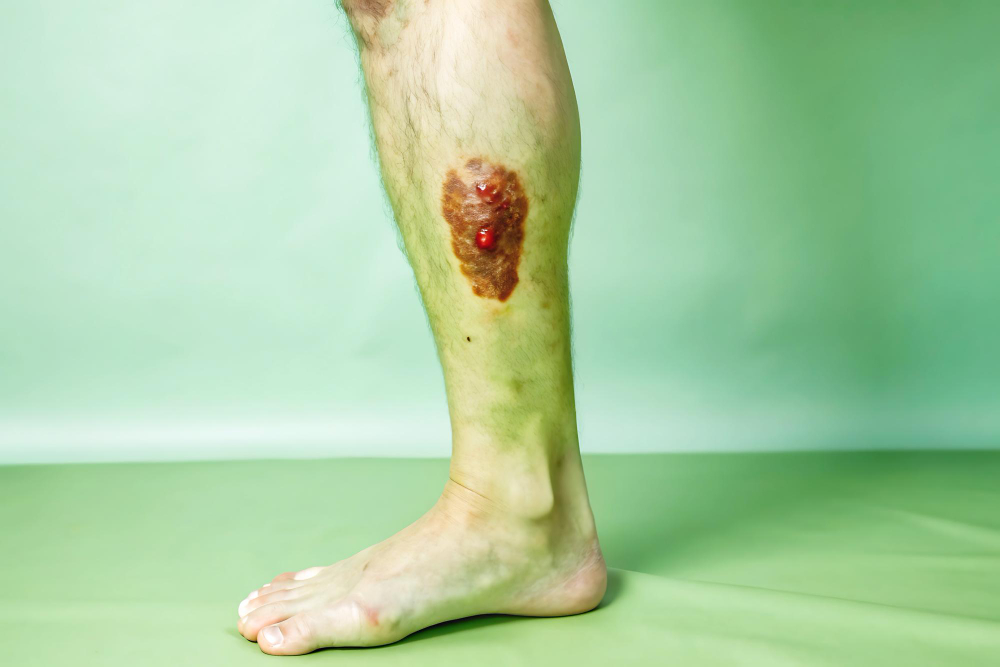
What are Chronic Leg Ulcers?
Chronic leg ulcers are open sores on the leg that do not heal within four weeks. These wounds can be painful and may return if not treated well. Often, they affect the lower part of the leg. Because they last a long time, they need special care. Chronic leg ulcers can lower your quality of life. Therefore, it is important to know the causes and treatment options.
Common Causes
Many things can lead to chronic leg ulcers. However, some causes are more common than others. Knowing these can help you prevent or manage the problem.Poor blood flow: Vein problems, like varicose veins, can slow healing.Diabetes: High blood sugar can damage nerves and blood vessels.Infections: Bacteria can slow healing and worsen ulcers.Injury: Even a small cut or bump can turn into an ulcer if not cared for.Other health issues: Conditions like heart or kidney disease can also play a role.
Because these causes are common, it is wise to watch for early signs.
Recognizing Symptoms
Early signs of chronic leg ulcers can help you seek help sooner. For example, you may notice:Pain or aching in the lower legSwelling around the soreRedness or dark skin patchesItching or burning feelingsFluid or pus coming from the woundBad smell from the sore
Sometimes, the skin around the ulcer feels hard or thick. If you see these symptoms, you should talk to a doctor soon.
Diagnosis Methods
Doctors use several ways to diagnose chronic leg ulcers. First, they will look at your leg and ask about your health history. Next, they may do tests to find the cause. For example:Blood tests: These check for diabetes or infection.Wound swab: This test looks for bacteria in the sore.Ultrasound: This checks blood flow in your legs.Other scans: Sometimes, doctors use X-rays to see if the bone is affected.
Because early diagnosis helps healing, it is best to see a doctor if you notice symptoms.
Treatment Options
There are many treatment options for chronic leg ulcers. The best plan depends on the cause and your health. However, most treatments aim to heal the sore and prevent infection.Cleaning the wound: Doctors clean the ulcer to remove dead tissue.Dressings: Special bandages keep the wound moist and protect it.Compression therapy: Wrapping the leg helps improve blood flow.Antibiotics: These fight infection if bacteria are present.Medications: Some creams or pills help with pain and swelling.Surgery: In rare cases, surgery may be needed to fix blood flow or remove damaged tissue.
Because each person is different, your doctor will choose the best treatment for you.
Lifestyle Tips for Management
Managing chronic leg ulcers at home is important. With the right steps, you can help your wound heal faster. For example:Keep your leg raised when sitting to reduce swelling.Wear compression stockings if your doctor suggests them.Clean the wound as directed by your healthcare provider.Eat healthy foods to support healing.Stay active, but avoid standing for long periods.Check your legs daily for new sores or changes.
Because small changes can make a big difference, follow your care plan closely.
Prevention Strategies
Preventing chronic leg ulcers is possible with some simple steps. For instance, you can:Control blood sugar if you have diabetes.Keep your skin clean and moisturized.Avoid injuries by wearing proper shoes and clothing.Exercise regularly to improve blood flow.Stop smoking, as it slows healing.See your doctor for regular check-ups.
Because prevention is easier than treatment, start these habits early.
Chronic leg ulcers can be managed with the right care and support. However, each person’s needs are unique. Consult a healthcare specialist at Lexington Health Care Hospital for personalized advice on managing chronic leg ulcers.